Archives
- 2026-09
- 2026-08
- 2026-07
- 2026-06
- 2026-05
- 2026-04
- 2026-03
- 2026-02
- 2026-01
- 2025-12
- 2025-11
- 2025-10
- 2025-09
- 2025-03
- 2025-02
- 2025-01
- 2024-12
- 2024-11
- 2024-10
- 2024-09
- 2024-08
- 2024-07
- 2024-06
- 2024-05
- 2024-04
- 2024-03
- 2024-02
- 2024-01
- 2023-12
- 2023-11
- 2023-10
- 2023-09
- 2023-08
- 2023-07
- 2023-06
- 2023-05
- 2023-04
- 2023-03
- 2023-02
- 2023-01
- 2022-12
- 2022-11
- 2022-10
- 2022-09
- 2022-08
- 2022-07
- 2022-06
- 2022-05
- 2022-04
- 2022-03
- 2022-02
- 2022-01
-
br Conclusion br Introduction The
2025-02-28
Conclusion Introduction The identification of Alzheimer's disease (AD) biomarkers and their ability to measure pathology antemortem has led to a fundamental reconsideration of the pathogenesis of AD. The importance of biomarkers was already reflected in revised diagnostic criteria proposed by
-
Ponatinib It was also shown that of crizotinib resistance
2025-02-28
It was also shown that 15% of crizotinib resistance mechanisms can be due to an amplification of ALK gene while 30% are caused by a variety of secondary mutations (S1206Y, G1202R, L1196M, C1156Y, G1269A, L1152R, F1174L and 1151Tins) in ALK tyrosine kinase. These mutations can modify the conformation
-
Bioactive peptides contain amino acids with possible bioacti
2025-02-27

Bioactive peptides contain 2–20 amino acids with possible bioactivities including antihypertensive, antioxidant, antimicrobial, anticancer, and opioid activity [9], [10], [11]. There has been a great interest in antihypertensive peptides for their efficiency in lowering blood pressure. The antihyper
-
The small fishers with little or no
2025-02-27
The small fishers with little or no quota who remained relied on quota leasing arrangements to continue their fishing operations. Such arrangements had relatively high transaction costs and by early 2000 it appeared that the demise of the small fisher was imminent [2]. The introduction in 2001 of t
-
spectinomycin br Experimental section br Competing interests
2025-02-27

Experimental section Competing interests Author's contributions Acknowledgement This research is partially supported by a seed fund for the Center for Drug Discovery and Translational Research (LS) and a research grant by Fujifilm (VPS and LS). The Sponsors played no roles in study desig
-
Here we investigate the ATM to ATR switch in
2025-02-27
Here, we investigate the ATM to ATR switch in normal human fibroblasts (82-6 cells) after irradiation with γ-rays, or high LET 56Fe and 28Si and moderate LET 16O particles. Our data provide important evidence of LET dependence on the transition of ATM to ATR as well as end resection at the sites of
-
Aclacinomycin A The known crystal structures of
2025-02-27
The known crystal structures of class C GPCR VFTs do not include attached TM domains, therefore current conformational data may not accurately reflect the dynamics of extracellular domains in full-length receptors. Nevertheless, compelling mechanisms of signal transduction can still be postulated. S
-
For the TSH receptor signaling at the
2025-02-27
For the TSH receptor, signaling at the Golgi/trans-Golgi network appears required for both rapid effects of TSH − such as Azidobutyric acid NHS ester depolymerization, which is implicated in thyroglobulin reuptake and, thus, thyroid hormone release − and late ones, such as those on gene transcripti
-
br Experimental procedures br Results br Discussion Although
2025-02-27
Experimental procedures Results Discussion Although previous studies have indicated that astrocyte aromatase plays a role in nociceptive processes (O'Brien et al., 2015, Smeester et al., 2016), the mechanisms responsible for the regulation of aromatase and its involvement in nociception rem
-
Our previous studies and others have identified that
2025-02-27
Our previous studies and others have identified that the inhalational anesthetic isoflurane induces neuronal apoptosis via [Ca2+]i overload through the opening of synaptic voltage-dependent calcium channels (VDCCs) and the excessive Ca2+ release from the endoplasmic reticulum (Zhao et al., 2011; Zha
-
Recently dairy proteins obtained from whey
2025-02-27
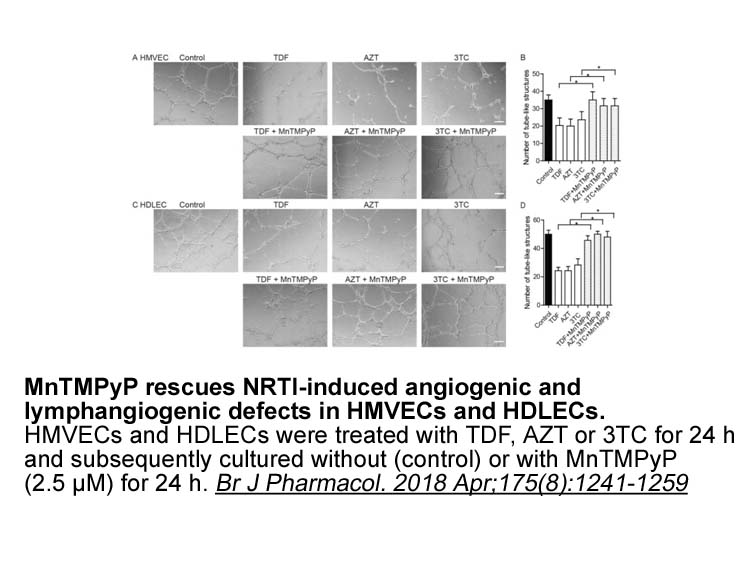
Recently, dairy proteins obtained from whey have received considerable attention for their antioxidant bioactivity (Bayram et al., 2008; Haraguchi et al., 2011; Zhang et al., 2012). Bovine whey proteins (WP) are widely used in various foods for their nutritional, health-promoting, and functional val
-
Besides above mentioned UV visible and fluorescence
2025-02-27
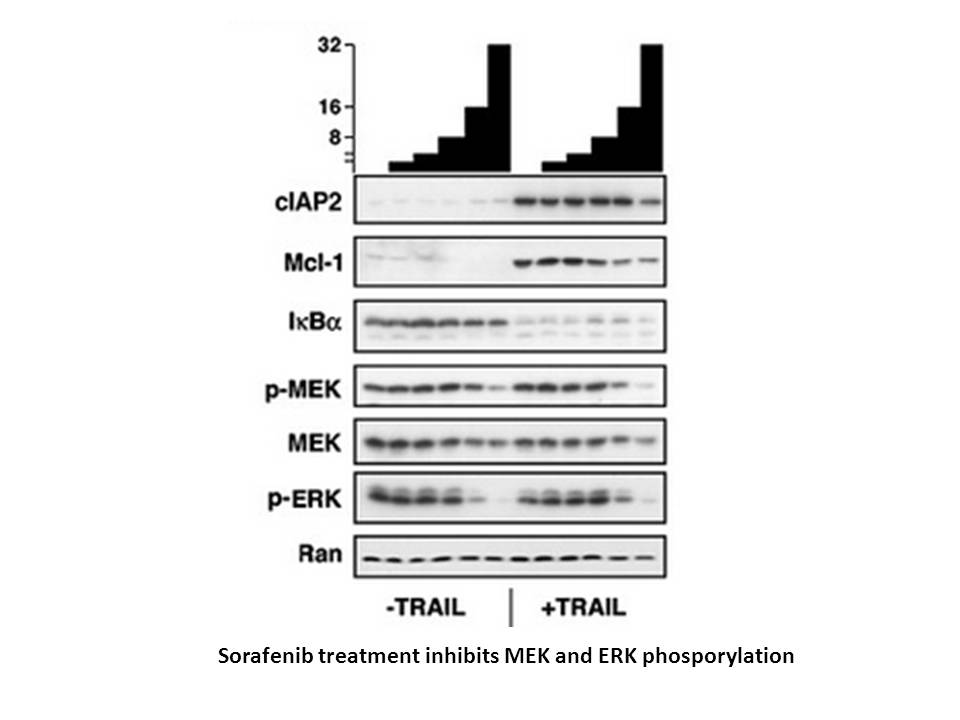
Besides above-mentioned UV–visible and fluorescence spectroscopy methods, electron paramagnetic resonance (EPR) spectroscopy, the only analytical method that detect compounds having unpaired electrons known as free radicals, was rarely used in antioxidant capacity measurement (Amarowicz et al., 2004
-
The proinflammatory cytokines and chemokines including IL TN
2025-02-27

The proinflammatory cytokines and chemokines, including IL-1β, TNF-α and MCP-1, mediate acute and chronic inflammation and play a role in the development of hypertension [2, [51], [52], [53]], cardiovascular diseases [4, 54] and renal injury [55, 56] in animal models and humans. Concerning the possi
-
Go 6983 For comprehensive understanding of actin myosin XI a
2025-02-26
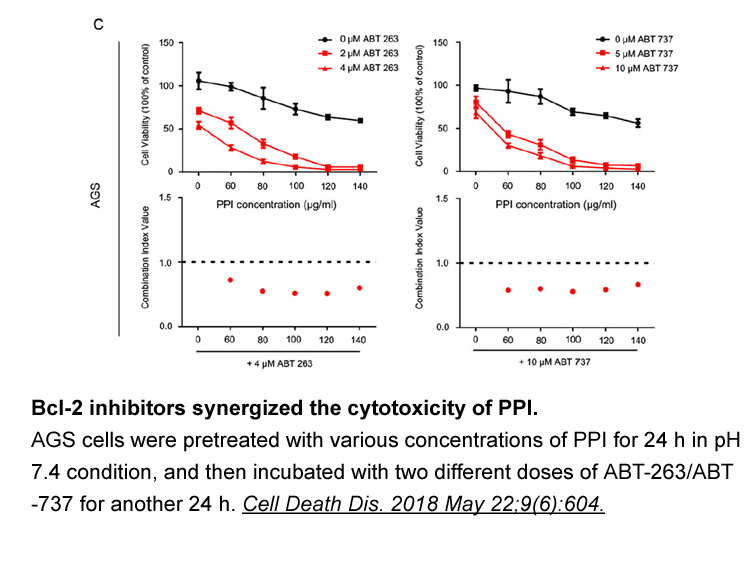
For comprehensive understanding of actin-myosin XI as a control network, it will be necessary to determine the functions of all the myosin XI and Go 6983 isoforms. However, it is difficult to reveal the function of individual myosin XI isoforms because most myosin XI single knockouts exhibited no s
-
Patients with ADA SCID may experience
2025-02-26
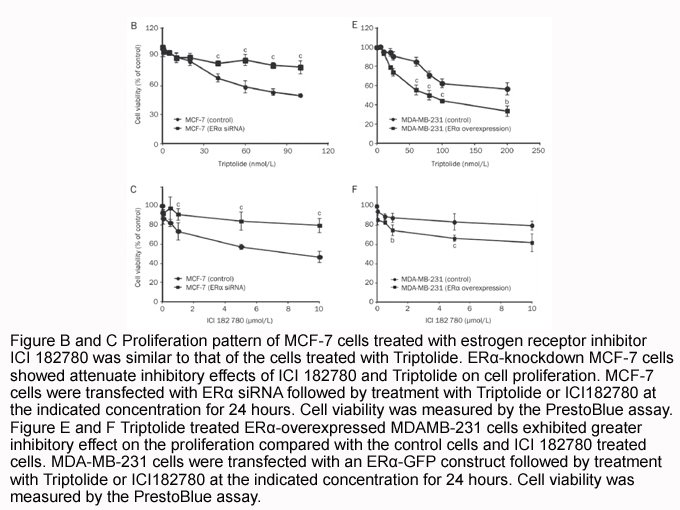
Patients with ADA-SCID may experience autoimmune AEs after SCT (and/or during ERT) that are thought to be related to immune dysregulation prior to achieving complete immune reconstitution. The more common autoimmune manifestations include hemolytic anemia, hypothyroidism, and immune thrombocytopenia
8005 records 39/534 page Previous Next First page 上5页 3637383940 下5页 Last page